
The Yeti
The white dweller of the peaks where the air runs out
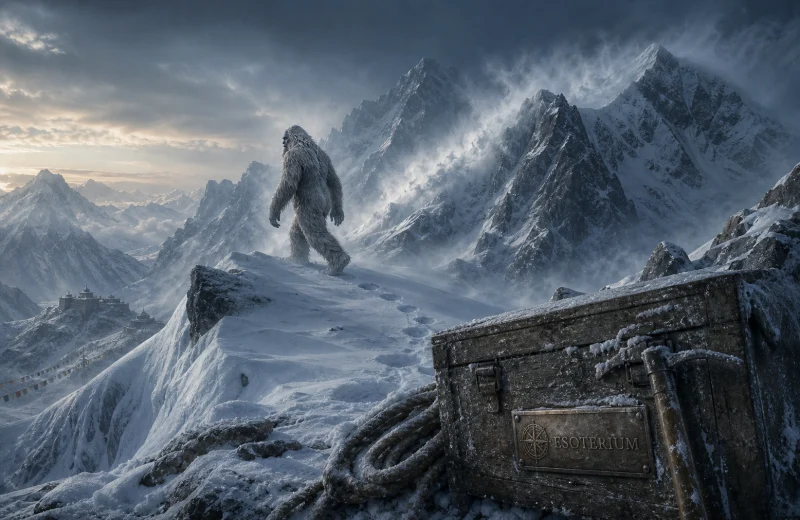
| Also known as | The Abominable Snowman, Meh-Teh, Migoi |
|---|---|
| Region | The Himalayas (Nepal, Tibet, Bhutan) |
| First sighting | Sherpa tradition; footprints photographed in 1951 |
| Type of creature | Mountain hominid |
| Danger level | ☾☾☾☾☾ |
The original owner of the mountain
To the Sherpas, the Yeti is neither news nor a monster: it is a dangerous neighbour whose name is better left unspoken after dark. For centuries, monasteries in Nepal and Tibet have kept what they hold to be its relics — a scalp, a mummified hand — and the herders know how to tell its trail from a bear's.
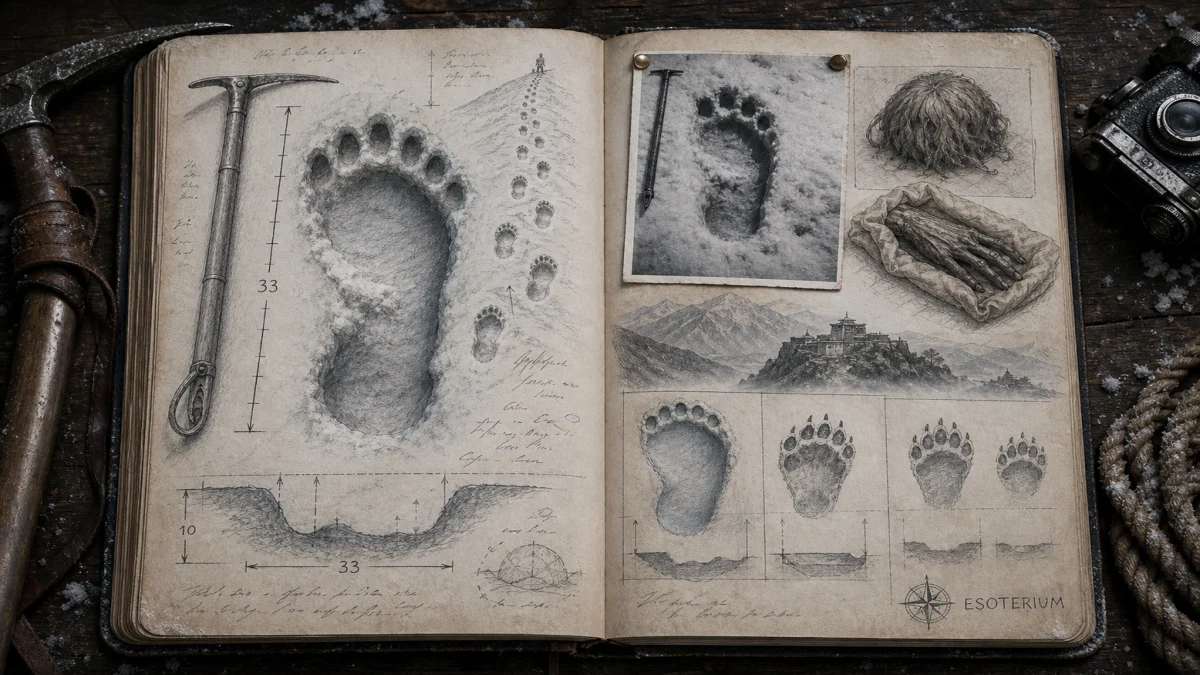
The West discovered it in 1951, when the mountaineer Eric Shipton photographed a crisp thirteen-inch footprint on an Everest glacier, his ice axe laid beside it for scale. That image turned the «Abominable Snowman» into a worldwide obsession.

Expeditions on its trail
In the fifties and sixties, whole expeditions were mounted just to hunt it, bankrolled by newspapers and even joined by Edmund Hillary himself. They came back with hairs, droppings and tales of cries in the fog, but no creature. Elite climbers such as Reinhold Messner spent years on its trail; Messner concluded that behind the myth walks the Himalayan brown bear, capable of striding upright across the snow.
What the DNA says
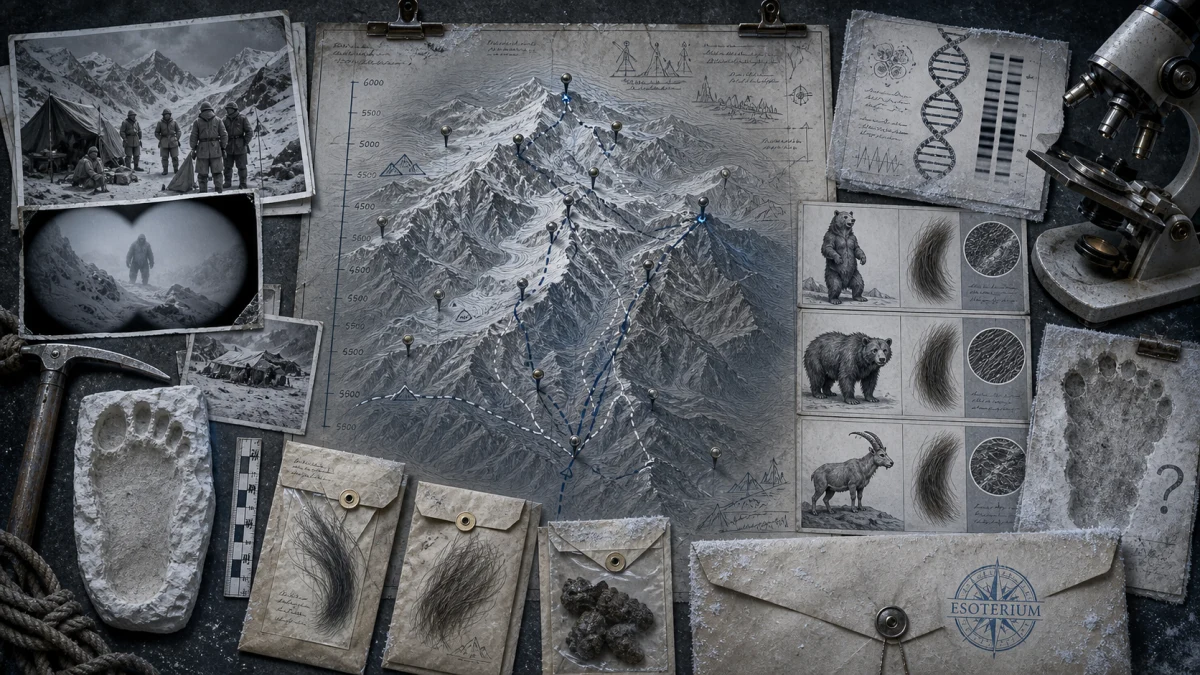
Modern genetic analysis of the relics and «Yeti» samples has almost always come back as bear — brown and Tibetan — with the odd goat. Case closed, say the laboratories. But at 6,000 metres, with the wind erasing the world, porters still find tracks climbing straight up slopes no bear would ever take. For now, the mountain keeps its silence.