
The Wendigo
The hunger that walks: the more it devours, the thinner and taller it grows
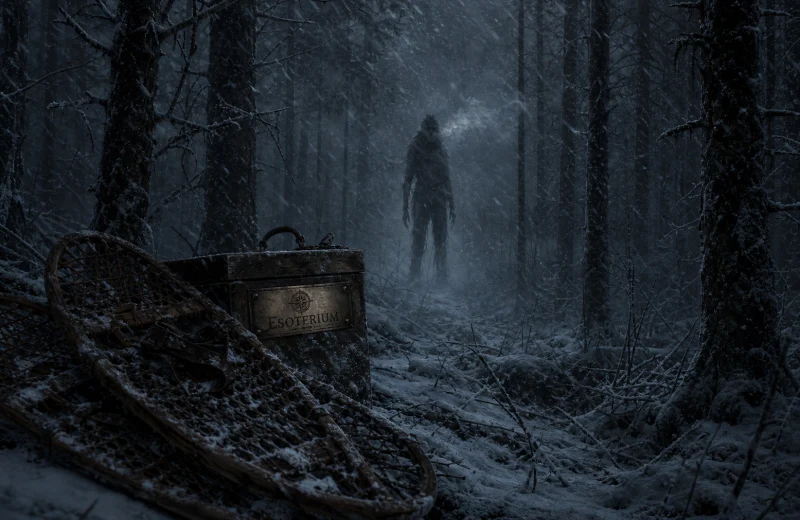
| Also known as | Windigo, Witiko |
|---|---|
| Region | Boreal forests of Canada and the Great Lakes |
| First sighting | Algonquian tradition, accounts since the 17th century |
| Type of creature | Malevolent spirit / cannibal |
| Danger level | ☾☾☾☾☾ |
The spirit of winter and hunger
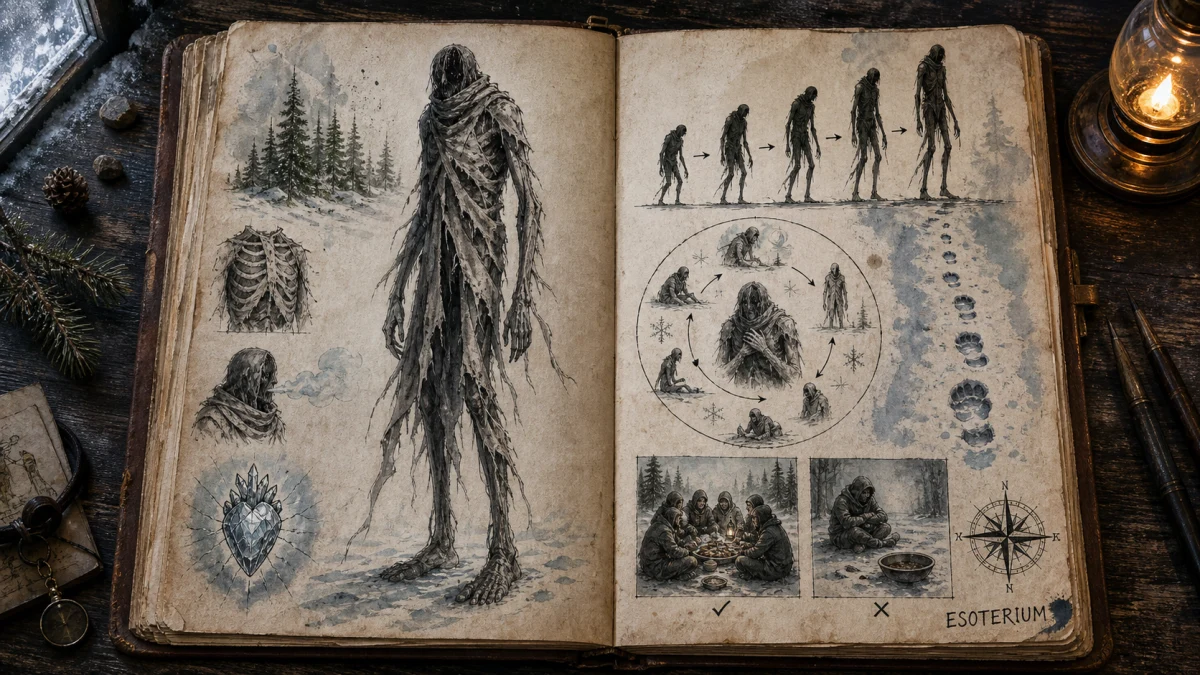
In the tradition of the Algonquian peoples, the Wendigo is what becomes of a human being who gives in to cannibalism in the cruellest depths of winter: the spirit of hunger takes possession and transforms them. It is described as towering and skeletal, skin stretched tight over bone, lips gnawed away, with a heart of ice. Its curse is perfect: every mouthful makes it grow, so its hunger can never be satisfied.

The Wendigo psychosis
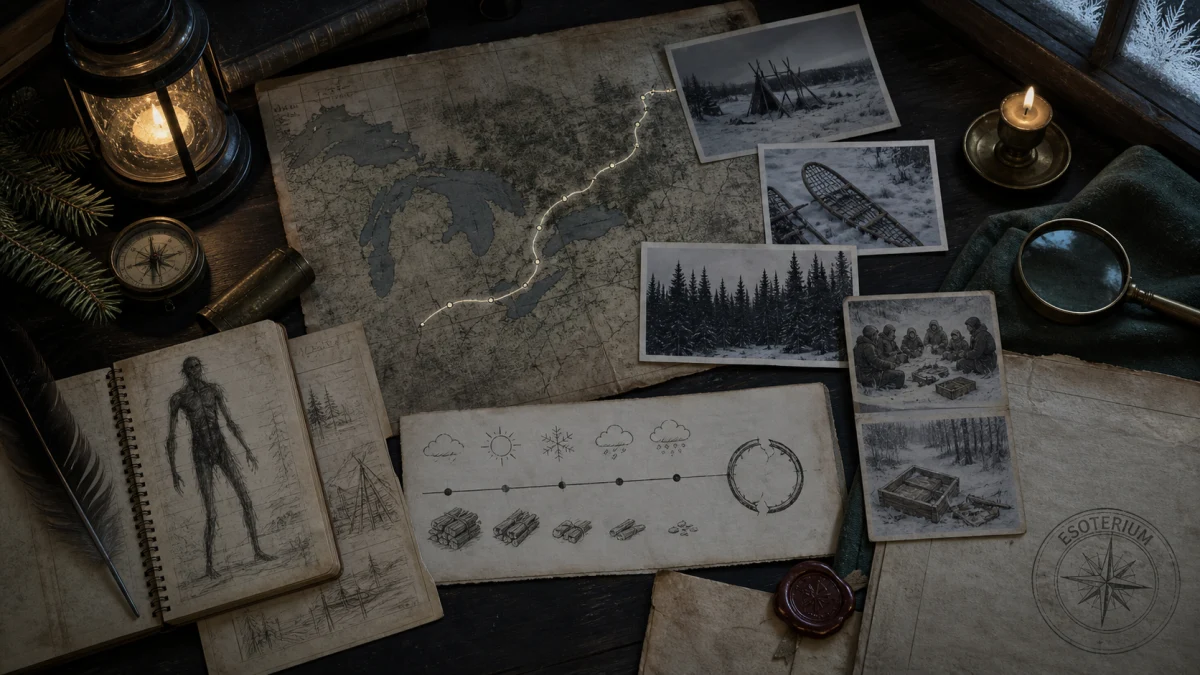
It is not just a tale for the fireside. Through the eighteenth and nineteenth centuries, ethnographers documented dozens of cases of «windigo psychosis»: people convinced they were transforming, gripped by a growing craving for human flesh, who begged to be executed before they could harm their own. The case of the Cree hunter Swift Runner, hanged in 1879 after devouring his family only miles from a post stocked with food, remains one of Canada's darkest files.
A monster with a moral
Anthropologists read the Wendigo as a cultural defence mechanism: the absolute taboo against cannibalism, given the body of a monster. Others note that it also embodies greed — whoever takes more than they need becomes a devourer. In the northern forests there are still hunters who will not pitch camp where the wind whistles «with a human voice», in case the hunger is out hunting that night.