
The Chupacabra
The predator that drained the livestock of half a continent
| Also known as | The Vampire of Moca, the Goat-Sucker |
|---|---|
| Region | Puerto Rico, Mexico, the southern US and South America |
| First sighting | 1995, Canóvanas (Puerto Rico) |
| Type of creature | Blood-drinking predator |
| Danger level | ☾☾☾☾☾ |
A plague that began in Puerto Rico
In March 1995, farmers in Canóvanas began finding goats, chickens and rabbits dead with two clean incisions in the neck and — so they swore — not a drop of blood left in the body. The press christened the culprit the «Chupacabras», the goat-sucker, and the name stuck: within months, identical attacks were being reported in Mexico, Texas, Chile and Argentina.
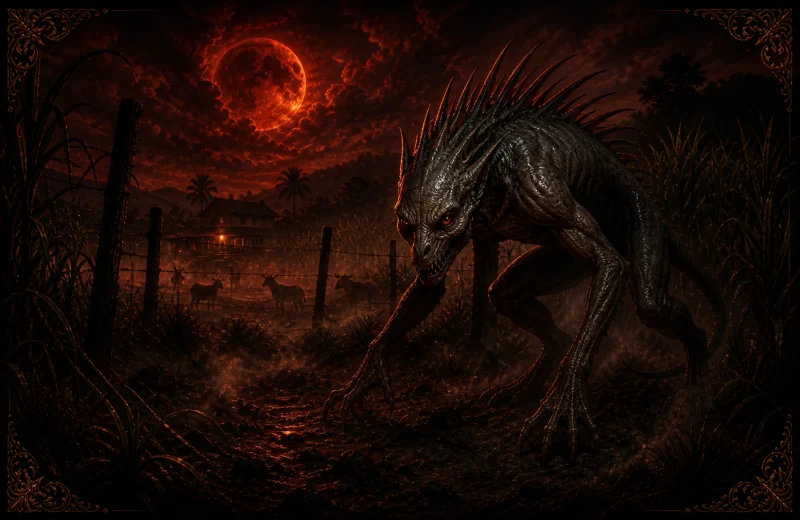
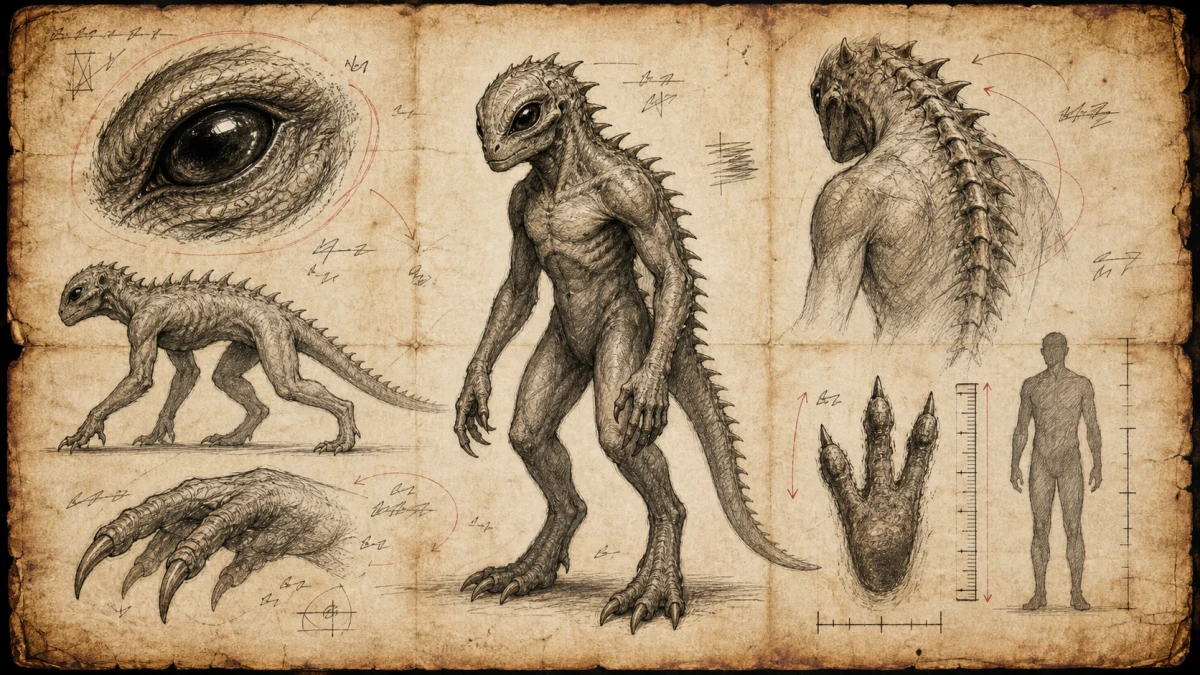
The most famous witness, Madelyne Tolentino, described it that same year as a creature five feet tall, standing upright, with enormous eyes and a crest of spines running from skull to tail. That silhouette — half reptile, half nightmare — is the one that burned itself into the popular imagination.

Sightings and victims
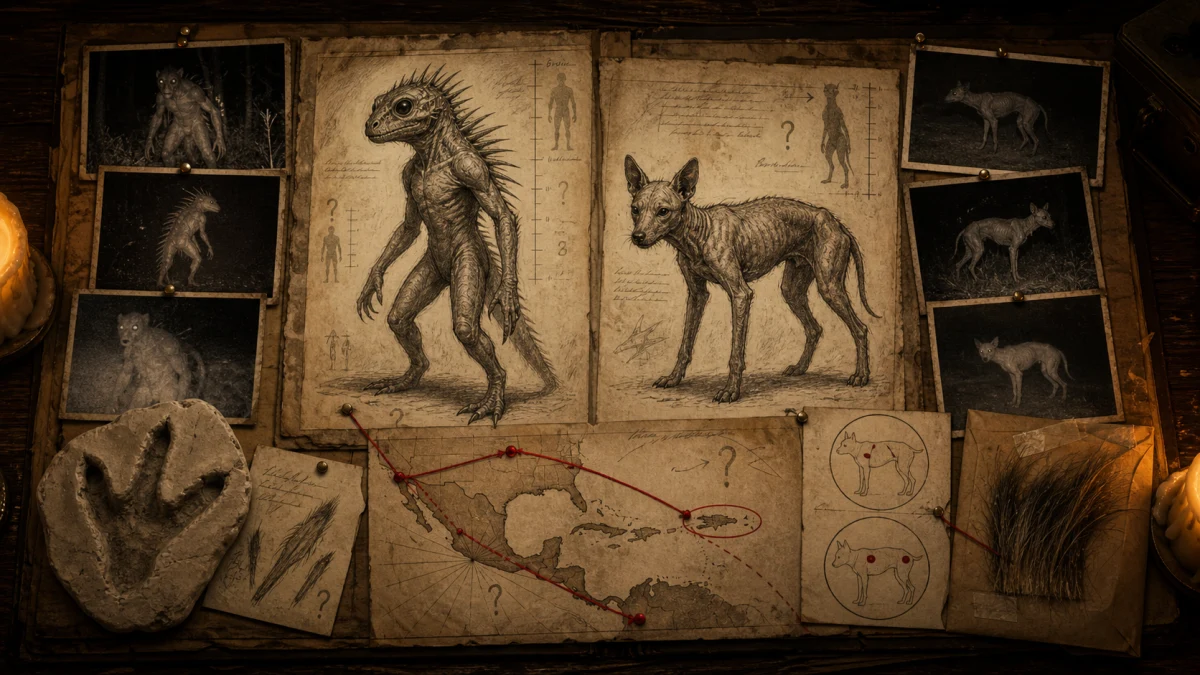
Since the 2000s, most of the «chupacabras» captured or photographed in Texas and northern Mexico have turned out to be hairless canids: coyotes and dogs ravaged by mange. But the ranchers answer that no coyote drains the blood of thirty chickens in a single night without carrying off even one, and new files on bloodless animals are still opened every year.
What could it be?
Skeptics point to common predators, mass panic, and how quickly a carcass can «look» empty of blood after death. Believers point to the surgical precision of the wounds and to the same pattern repeating itself thousands of miles apart. Between the two, the Chupacabra remains Latin America's most famous cryptid: no one has caught it, but few will swear it does not exist.