
Bigfoot, the Sasquatch
The giant of the forests who walks just beyond the reach of the camera
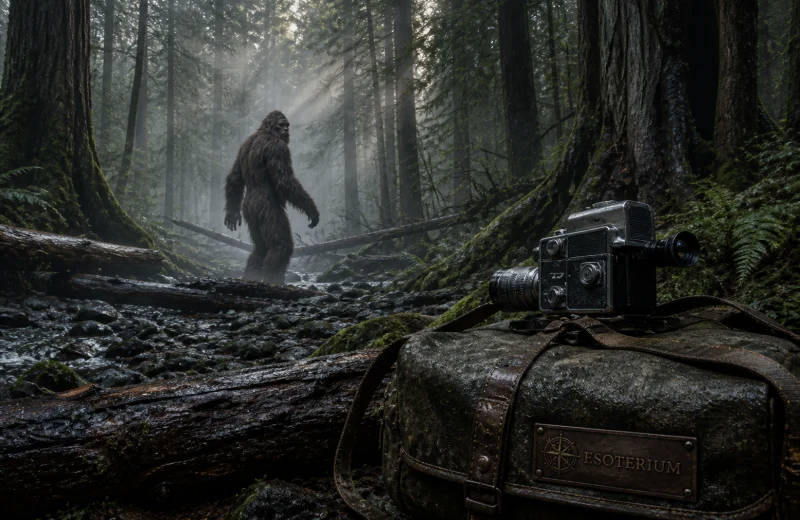
| Also known as | Sasquatch, the Wild Man of the Woods |
|---|---|
| Region | Forests of northwestern North America |
| First sighting | Native traditions; famous footprints in 1958 |
| Type of creature | Giant hominid |
| Danger level | ☾☾☾☾☾ |
From native myth to the front page
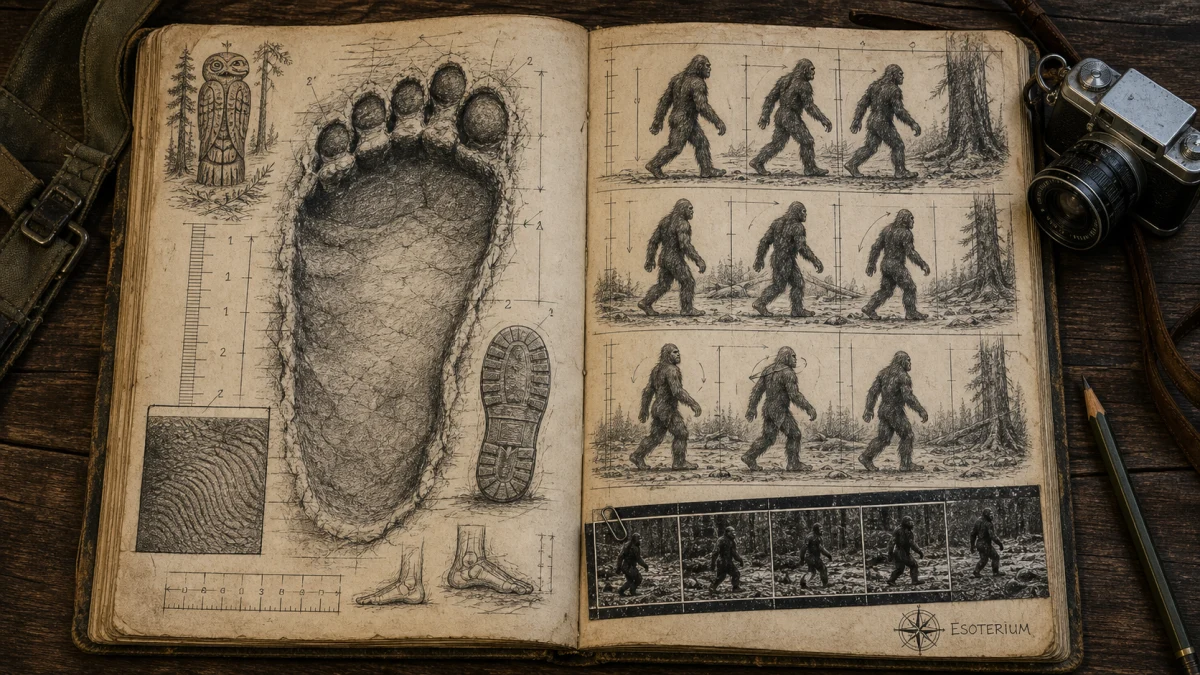
Long before it was called Bigfoot, it already lived in the indigenous languages of the Pacific coast: «sésquac», the wild man of the forest. In 1958 a California construction worker found sixteen-inch footprints circling his bulldozer; the local paper ran the word «Bigfoot» in its headline, and the giant walked into popular culture and never left.
In 1967, Roger Patterson and Bob Gimlin filmed at Bluff Creek the twenty most disputed seconds in the history of mystery: a burly, fur-covered figure striding along the dry riverbed and turning to look at the camera. Half a century of analysis has managed neither to authenticate it nor to fully take it apart.

Footprints, screams and knocking wood
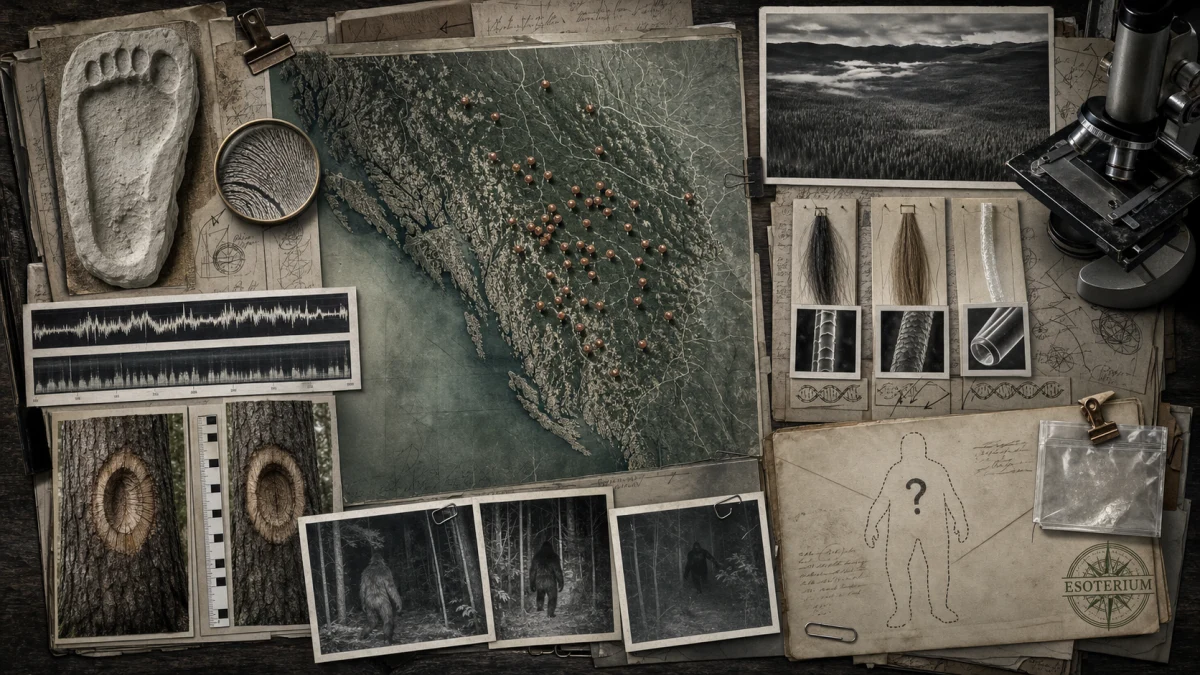
Hundreds of traces are logged every year: footprints with dermal ridges, deep howls that no catalogue can identify, rhythmic knocks against tree trunks as night falls. The sighting databases now hold more than 10,000 reports, many from hunters and forest rangers not much given to fantasy.
The problem of the body
Science is unambiguous: without a body, a bone or a valid DNA sample, Bigfoot does not exist; analyses of alleged Bigfoot hair have come back as bear, cow and even fibreglass. Its defenders answer that the American Northwest holds forests the size of entire countries, where a clever, scarce primate might simply refuse to be found. Meanwhile, every remote campsite sleeps with one ear turned toward the treeline.