
The Tatzelwurm
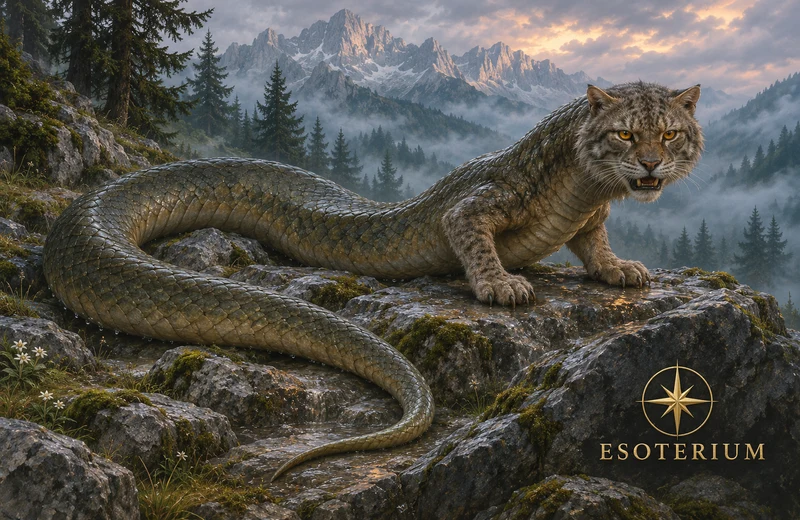
The strange Alpine dragon with a cat’s face
| Also known as | Stollenwurm · Bergstutz |
|---|---|
| Region | Alps; Swiss, Austrian and Bavarian traditions |
| First sighting | Tradition predating the 20th century; Meiringen episode, 1935 |
| Type of creature | Creature of Alpine folklore, zoologically unconfirmed |
| Danger level | ☾☾☾☾☾ |
A cat where a snake should be
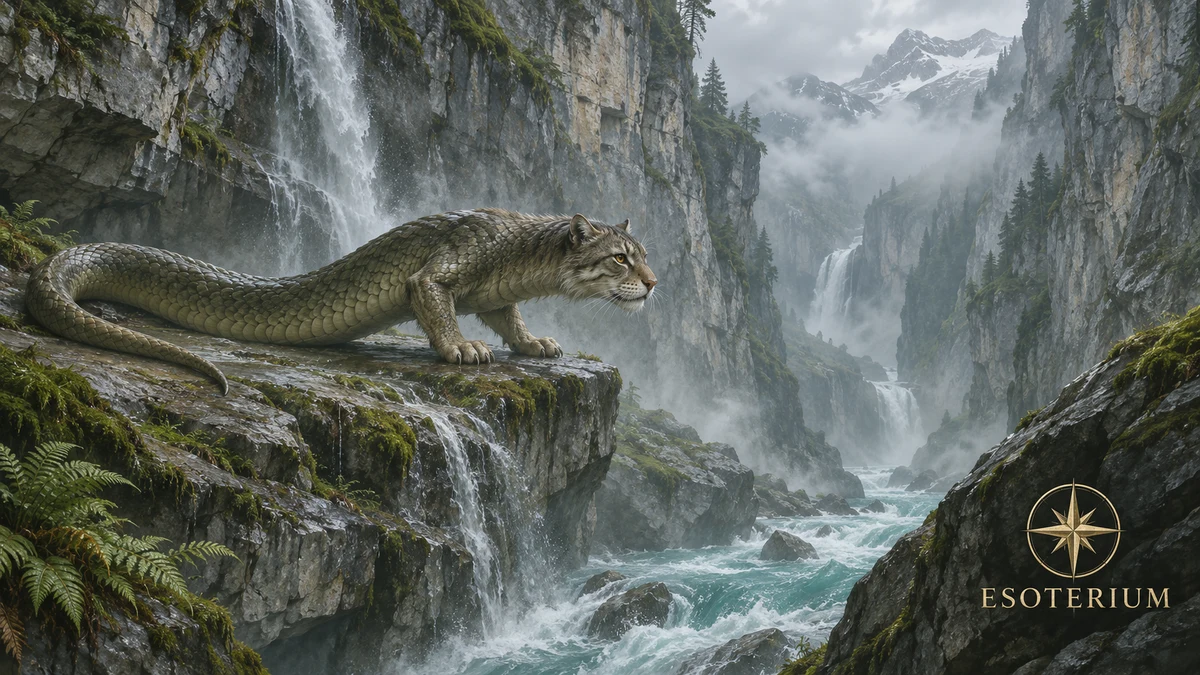
Imagine a wet ledge, the roar of a torrent and a feline head emerging between the stones. As the animal moves, it reveals a body that seems never to end: a thick serpent supported by short legs. This unsettling combination earns the Tatzelwurm its place in our bestiary.
An 1895 folklore collection records feline heads, snake-like bodies and varying numbers of legs. Our illustrations are artistic reconstructions: they choose the version with two front legs and do not depict documented sightings.

Meiringen and the photograph of 1935
According to Jungfrau Region, in 1935 the Berliner Illustrirte Zeitung published a photograph credited to Balkin, presented as a Tatzelwurm near Meiringen. The reward offered for a specimen was never paid.
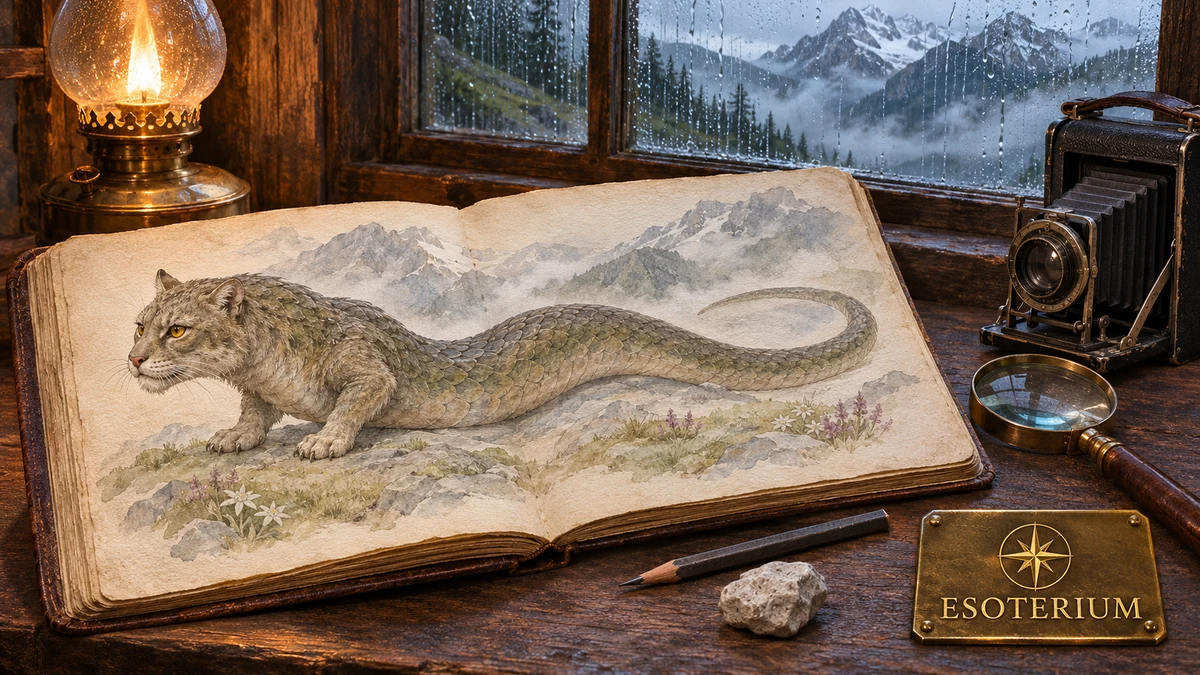
A photograph can turn a local rumour into an irresistible story. But the leap from “someone published this image” to “this image proves a species exists” requires independent checks. We preserve the episode as part of the mystery’s history; the sketchbook scene is an editorial interpretation, not original historical material.
What the archive actually establishes
The satirical magazine Nebelspalter devoted an illustration to the Meiringen Tatzelwurm in 1935. The ETH Zurich archive preserves that item: it documents the story’s cultural circulation.
A creature’s appearance in newspapers, drawings and conversations does not automatically multiply the evidence for its existence. It helps to ask what comes from an observation and what repeats an earlier account. Without a verifiable specimen, an unforgettable anatomy may remain a memorable way of telling stories about a landscape.
The mountain’s imaginary guardian
The Deutsches Jagd- und Fischereimuseum has featured the Tatzelwurm in an art exhibition by Jennifer Franzke. That setting invites us to enjoy it as a legacy of imagination, without confusing a reconstruction with a discovery.
At Esoterium, the danger moons describe its legendary character, not a verified threat. Its power lies in surprise: recognising a cat, then realising that its body belongs to another story. Between the mist and the thunder of water, that silhouette alone can make a crack in the rocks seem to conceal a secret.