
The Fouke Monster
The shadow in Arkansas’s wetlands that brought Boggy Creek to life
| Also known as | Boggy Creek Monster, Fouke creature |
|---|---|
| Region | Fouke and Miller County, Arkansas, United States |
| First sighting | Accounts dating to 1946; famous case in May 1971 |
| Type of creature | Hairy humanoid / wetland cryptid |
| Danger level | ☾☾☾☾☾ |
The visitor from the swamp
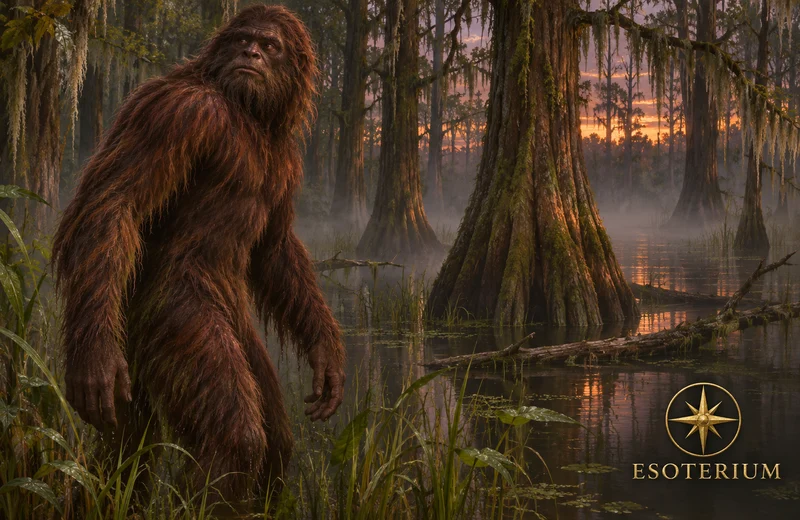
In Fouke, the legend’s landscape is one of dark water, dense vegetation and houses close to the woods. Its creature is described as a bulky, hair-covered humanoid with reddish eyes. The Encyclopedia of Arkansas dates the episode that brought it to prominence to May 1971: Bobby Ford said a being roughly seven feet tall had grabbed him beside his home.
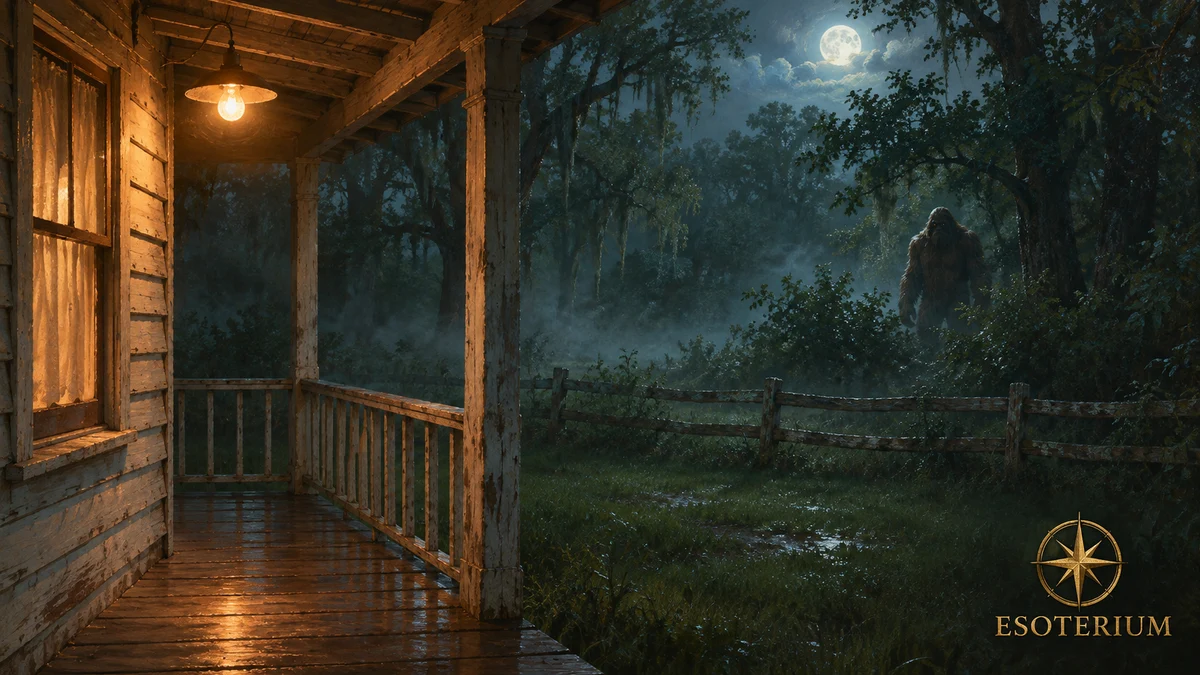
His wife, Elizabeth, reported seeing a hairy arm coming through a window. The accounts brought journalists and investigators to the property. These are statements attributed to the family, not a confirmed identification of an unknown animal.

What remained after the night
The same account records that the sheriff’s search found strange tracks and scratches on the porch. Although the men said they had fired at the creature, investigators found no blood. Those clues did not establish the identity of the supposed visitor.
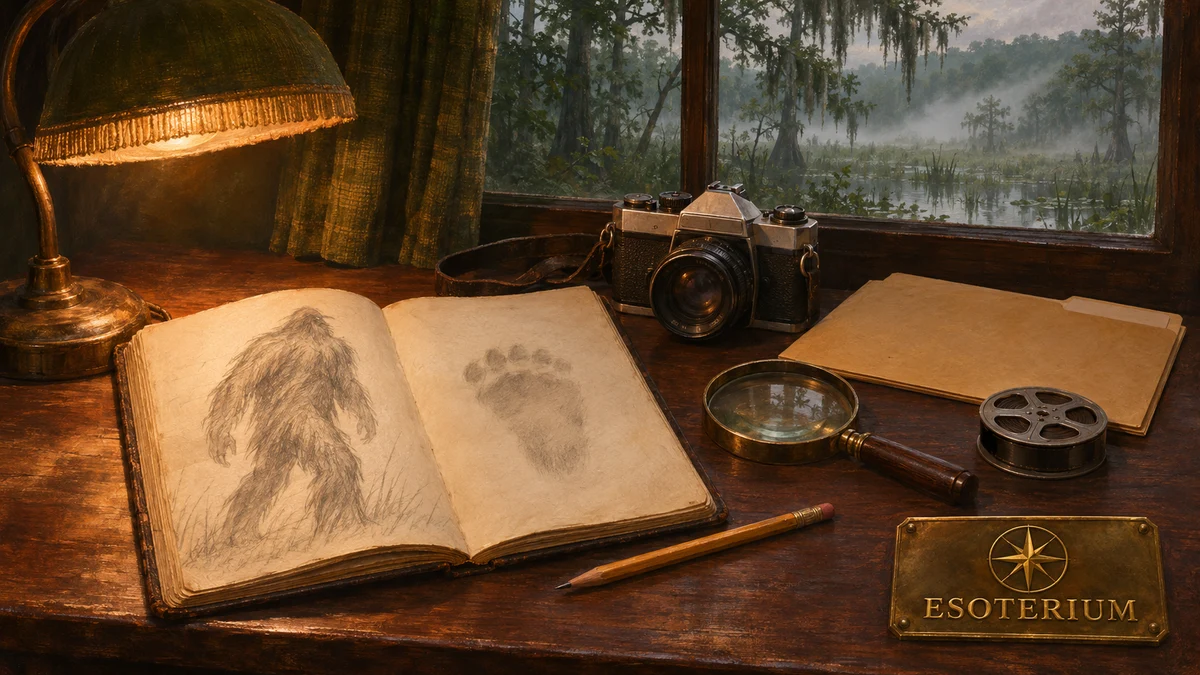
A mark needs context: who found it, how it was preserved and whether it can be compared with others of known origin. A photographed or drawn footprint alone cannot establish a new species. Nor would it show that every Fouke account describes the same phenomenon.
From the newspaper to the screen
In 1972, Charles B. Pierce brought the story to cinemas with The Legend of Boggy Creek. The film’s encyclopedia entry explains that it combined interviews with local residents and dramatic reconstructions of alleged encounters. Some participants played themselves, while the surrounding landscape helped make the story feel plausible.
The film’s own website highlights that blend of testimony and staging. Its narrative power calls for a distinction: a convincing sequence may depict what somebody reported without recording the original encounter. Cinematic success spread the legend; it did not turn the staged scenes into zoological evidence.
A creature that stayed in Fouke
The story has a life beyond the screen. Fouke’s Monster Mart maintains a museum and memorabilia devoted to the creature. It is a visible example of how a frightening tale can become shared memory and part of a community’s identity.
The case remains a collection of accounts and clues without a verified species to explain them. The three danger moons reflect the reported attack, not a demonstrated risk. The illustrations are artistic reconstructions: neither the house nor the notebook represents original case documents or frames from the film.