
The Dobhar-chú
The Irish water hound whose legend became tied to a gravestone
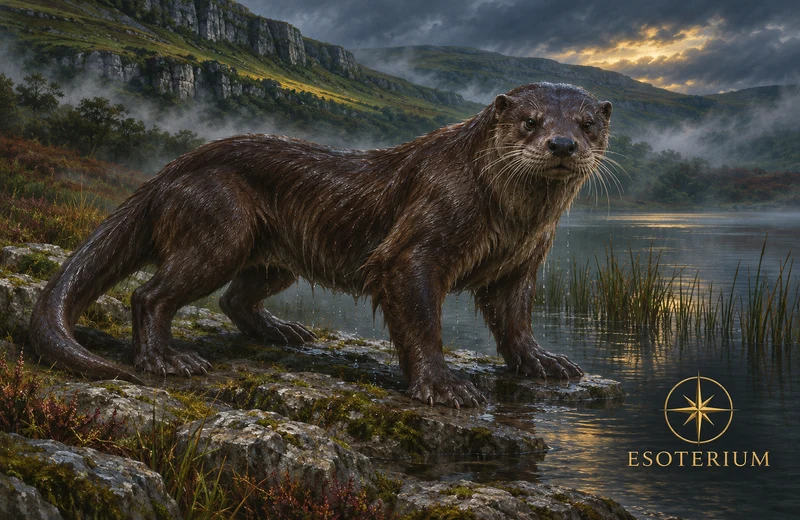
| Also known as | Water Hound, Master Otter, King Otter |
|---|---|
| Region | Glenade Lough and County Leitrim, Ireland |
| First sighting | Legendary episode set in 1722; later oral tradition |
| Type of creature | Legendary aquatic mammal / dog-and-otter hybrid |
| Danger level | ☾☾☾☾☾ |
Something more than an otter
The Dobhar-chú needs neither a serpentine neck nor a gigantic silhouette to seem strange. Its unease comes from a familiar combination: the body of a large dog with an otter’s head and coat. The Irish national parks folklore booklet explains its name as “water hound” and presents it as a legendary inhabitant of lakes and rivers.
That combination places it on an unsettling boundary: an animal that seems to belong to the water yet can also come ashore. In the stories, approaching the bank means entering a territory that is not entirely empty.

The whistle at Glenade
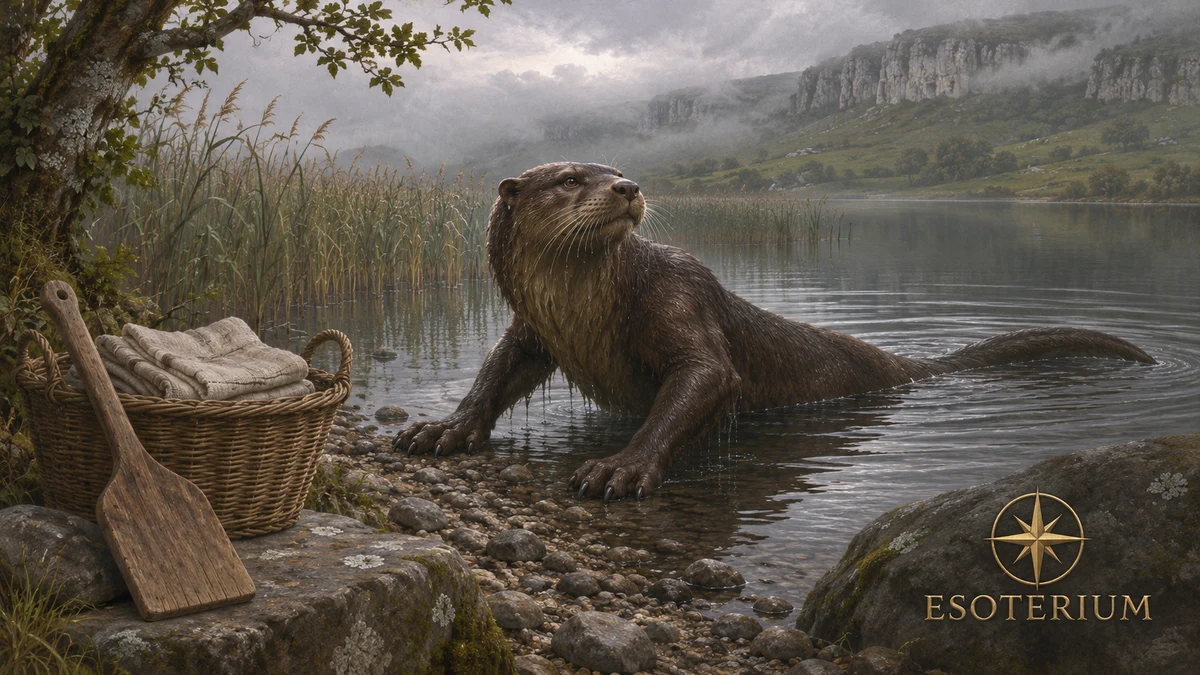
The best-known story is set in 1722 and concerns Grace Connolly, also named as Grace McGloighlin. In the versions gathered by the Leitrim Observer, she went to wash clothes and did not return. Her husband found her dead beside the lake, with the creature next to her.
The man killed the animal, but it whistled to summon its companion. The ensuing pursuit introduces a second monster and carries the danger from the water onto dry land. This is an orally transmitted narrative: the newspaper notes that no written accounts of the story survive from that period.

A real stone, an open interpretation
A gravestone in Conwall cemetery, in the Glenade valley, is associated with the death. The digital record of the carving preserved on Zenodo shows and describes an otter-like animal pierced by a weapon. The stone provides an object to study, not a specimen of the creature.
The record itself raises an intriguing possibility: the carvings may have inspired the legend rather than illustrated an earlier event. That suggestion does not settle the tale’s origins. It does remind us that an old image and the explanation a community gives it can have different histories.
The monster that survived in the story
The most fruitful question is not only what might have hidden in the lake, but how a shoreline, a name and a stone came to form such a persistent story. The Dobhar-chú belongs to folklore and the bestiary of unverified creatures; the cited sources do not establish an unknown species.
Its four danger moons reflect the legend’s fatal attack, not a demonstrated risk. The illustrations are artistic reconstructions. The notebook and uncarved stone in the interior scene are evocative props: they reproduce neither the Conwall gravestone nor historical documents.