
The Bunyip
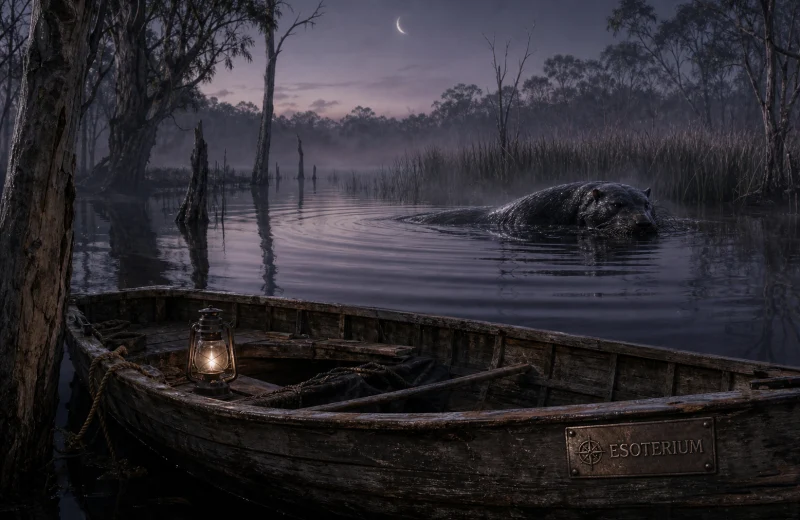
Something breathes beneath the black water of the billabong
| Also known as | Kianpraty and other historical names |
|---|---|
| Region | Wetlands, rivers and billabongs of Australia |
| First sighting | Aboriginal traditions predating colonisation; nineteenth-century press |
| Type of creature | Legendary water being / cryptid |
| Danger level | ☾☾☾☾☾ |
Dweller in dark water
Bunyip is the name through which colonists grouped accounts of water beings from different Aboriginal communities and languages. There is no single anatomy: witnesses described round whiskered heads, long necks, dark fur, flippers or legs. Place and sound remain more consistent—deep pools, reed-lined banks and a nocturnal booming call that warns travellers away.
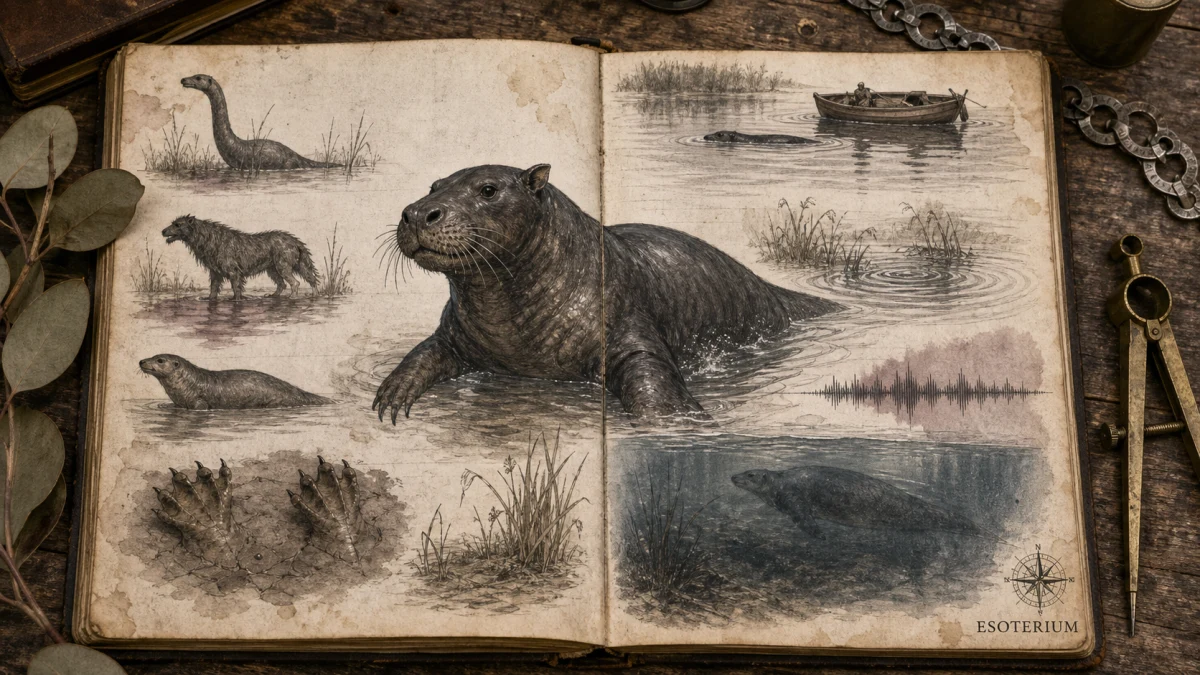

From local account to colonial monster
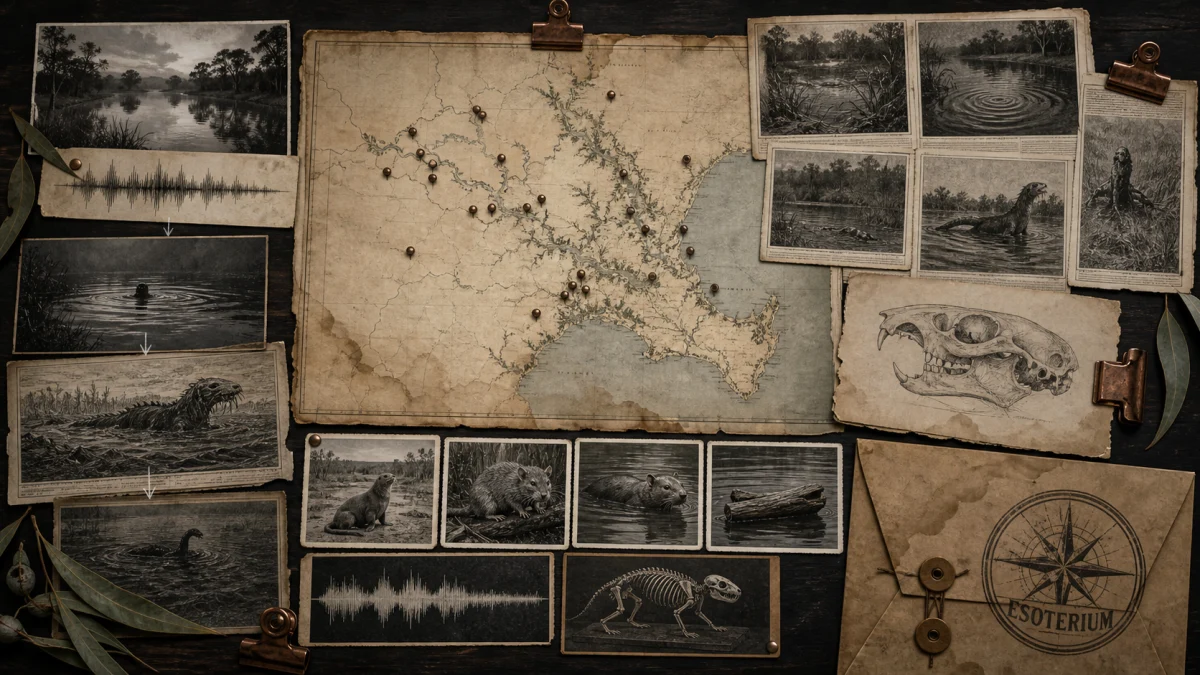
During the nineteenth century newspapers and museums turned diverse traditions into a search for one unknown animal. Alleged skulls, drawings and contradictory reports travelled between towns and settlements. Stripped of cultural context, the press assembled a composite creature that resembled a seal, dog, horse or reptile depending on the day’s story.
Animals, echoes and memory
Seals travelling upriver, swimming wombats, water rats, drifting logs and deep-calling birds can explain many encounters. Memories of extinct giant marsupials have also been proposed, though there is no evidence of their survival. Such theories do not replace the cultural meanings of the original stories: wetlands remain powerful and dangerous places tied to knowledge that cannot be reduced to a single monster.